
Post-Surgical Compression Garments
The Complete Professional Guide for Your Recovery Journey
Table of Contents
Everything You Need to Know for Successful Recovery
An empathetic, comprehensive guide to understanding and using compression garments after surgery – by the recovery specialists at Kaya Varua Massage.
Introduction: Your Complete Resource for Post-Surgical Compression Garments
Whether you’re preparing for surgery, currently in recovery, a healthcare professional seeking deeper knowledge, or someone in the compression garment industry wanting comprehensive information – this guide is for you. At Kaya Varua Massage, we’ve noticed a critical gap in accessible, honest information about these essential recovery tools.
Too many people receive their compression garment with minimal guidance, leading to confusion, improper use, or unrealistic expectations. Healthcare providers may lack time for detailed explanations. Garment retailers might not have adequate medical training. And those considering surgery often don’t know what questions to ask.
After years of supporting post-surgical recovery throughout South Florida, we’ve compiled this comprehensive resource to serve everyone seeking reliable information about compression garments – from patients to professionals, from pre-surgery planning to complete recovery.
Who This Guide Serves:
- Pre-surgery patients researching what to expect
- Post-surgery patients navigating their recovery
- Healthcare professionals seeking comprehensive patient resources
- Compression garment retailers wanting medical accuracy
- Massage therapists specializing in post-surgical care
- Family members supporting loved ones through recovery
- Anyone interested in understanding these medical devices
What You'll Discover in This Guide:
- The science and engineering behind medical compression garments
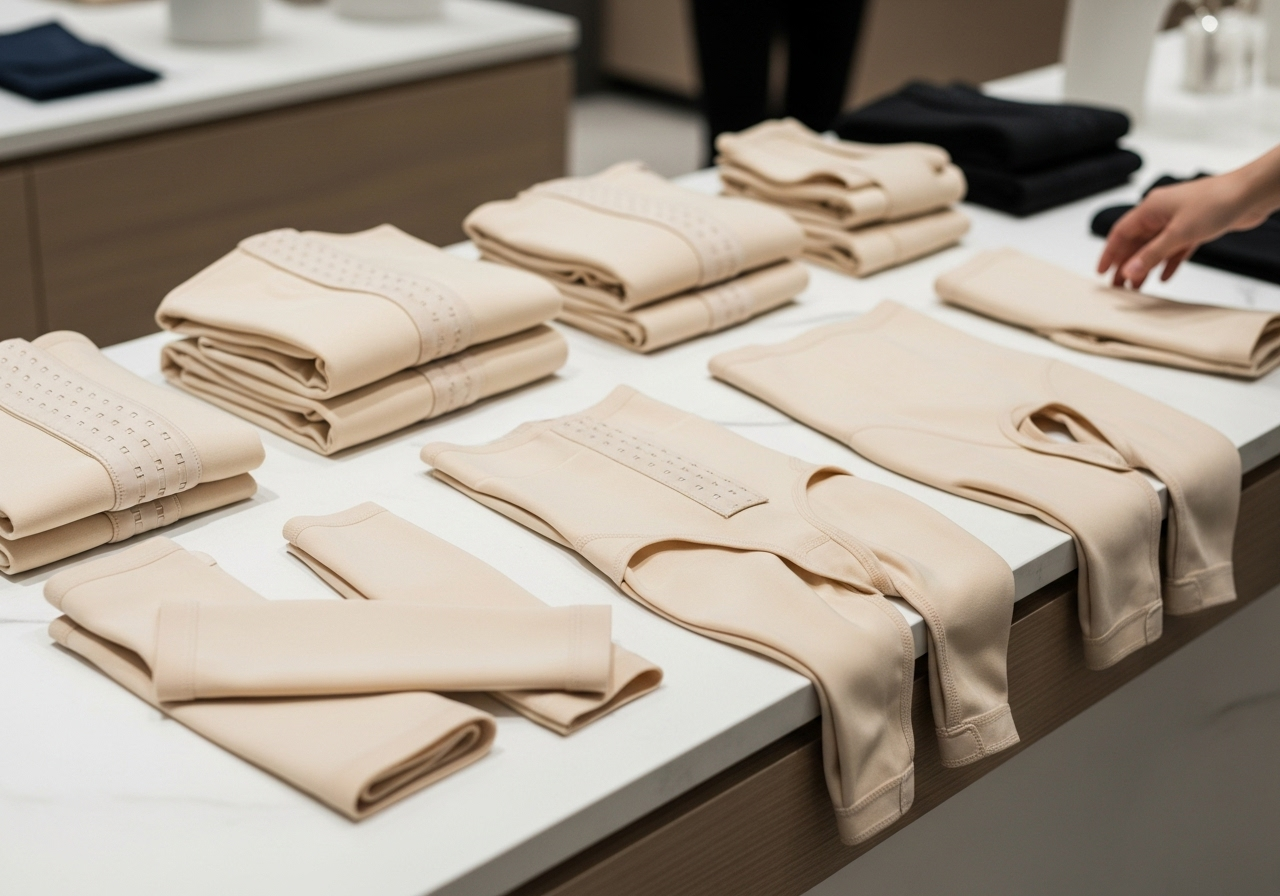
- Complete overview of ALL garment types and their uses
- How to choose the perfect garment for your specific needs
- Realistic timelines that honor individual healing
- Practical care instructions for real-world use
- The critical relationship between compression and lymphatic drainage
- Honest guidance about transition and expectations
The Science and Purpose of Medical Compression
Understanding Medical-Grade Engineering
Post-surgical compression garments aren’t simply tight clothing – they’re precisely engineered medical devices designed with specific healing objectives. According to the Journal of Plastic and Reconstructive Surgery, these specialized garments provide therapeutic benefits that regular shapewear cannot replicate.
What Makes Medical Compression Special:
Advanced Material Technology:
- Medical-grade fabrics tested for 24/7 skin contact
- Hypoallergenic materials preventing irritation
- Antimicrobial treatments reducing infection risk
- Moisture-wicking properties maintaining skin health
- Temperature-regulating technology for comfort
Strategic Construction Features:
- Graduated compression zones targeting specific areas
- Flat-lock seaming preventing skin marks
- Four-way stretch maintaining consistent pressure
- Reinforced panels supporting surgical sites
- Breathable zones preventing moisture buildup
The Three Pillars of Compression Therapy
According to the American Society of Plastic Surgeons, quality compression garments achieve three critical healing objectives:
1. Edema Control and Prevention
External pressure reduces interstitial space where fluid accumulates, effectively:
- Preventing seroma formation
- Accelerating lymphatic drainage
- Reducing post-operative swelling
- Minimizing bruising and discoloration
2. Tissue Stabilization and Support
Compression maintains newly contoured tissues in optimal position by:
- Preventing tissue migration
- Supporting skin retraction
- Maintaining surgical results
- Reducing tension on incision sites
3. Scar Management and Fibrosis Prevention
Uniform pressure promotes optimal healing through:
- Minimizing hypertrophic scarring
- Preventing irregular fibrosis formation
- Promoting smooth, even skin texture
- Reducing hard nodule development
Complete Overview of Compression Garment Types
Full Body Compression Garments
Body Suits and Full Coverage Options:
- Complete torso and thigh coverage
- Ideal for multiple area procedures
- Built-in bra support options
- Open or closed crotch designs
- Adjustable shoulder straps
- Side zippers or hook-and-eye closures
Abdominal Compression Garments
Abdominal Binders and Boards:
- Wrap-around designs with Velcro closure
- Adjustable compression levels
- Often includes rigid or semi-rigid boards
- Ideal for tummy tucks and C-sections
- Easy application for limited mobility
High-Waisted Compression Shorts:
- Extended abdominal coverage
- Thigh and hip support
- Perfect for lower body procedures
- Anti-roll waistbands
- Various compression levels available
Upper Body Compression Garments
Post-Surgical Bras:
- Front-closure designs for easy application
- No underwire construction
- Adjustable band and strap system
- Drainage bulb pockets when needed
- Available in various support levels
Compression Vests:
- Full upper body coverage
- Male and female specific designs
- Ideal for chest procedures
- Back support included
- Breathable mesh panels
Arm Sleeves and Boleros:
- Individual or attached arm coverage
- Graduated compression from wrist to shoulder
- Perfect for arm lifts or liposuction
- Available with or without hand coverage
Lower Body Compression Garments
Compression Shorts and Capris:
- High-waisted designs supporting lower abdomen
- Reinforced inner thigh panels
- Targeted compression for BBL
- Various lengths available
- Open or closed crotch options
Full-Length Compression Leggings:
- Complete leg coverage
- Graduated compression design
- Ankle to waist support
- Ideal for leg procedures
- Anti-slip waistbands
Below-Knee Garments:
- Calf and ankle support
- Perfect for lower leg procedures
- Easy to wear with regular clothing
- Various compression levels
- Seamless toe options
Facial and Neck Compression
Chin Straps and Facial Garments:
- Post-facelift support
- Adjustable Velcro closures
- Ear protection designs
- Breathable materials
- Various coverage options
Neck Compression Bands:
- Targeted neck support
- Post-neck lift recovery
- Adjustable compression
- Comfortable for sleeping
- Moisture-wicking materials
Specialty and Custom Garments
Male-Specific Designs:
- Compression vests for gynecomastia surgery
- Abdominal binders with male anatomy consideration
- Discreet designs for everyday wear
Custom-Made Options:
- Tailored to unique body shapes
- Specific surgical requirements
- Multiple compression zones
- Special medical conditions
- Unusual body proportions
Complete Guide to Medical Compression Stockings
Understanding Compression Levels and Medical Applications
Medical compression stockings serve a critical purpose in preventing Deep Vein Thrombosis (DVT) and supporting vascular health post-surgery. Unlike aesthetic compression garments, these are specifically designed for medical necessity.
Compression Classification System:
Class 1: Light Support (15-20 mmHg)
- Minor ankle swelling
- Tired, achy legs
- Minor varicose veins
- Pregnancy-related swelling
- Long travel prevention
Class 2: Medium Support (20-30 mmHg)
- Post-surgical DVT prevention (most common)
- Moderate varicose veins
- Post-sclerotherapy treatment
- Moderate edema management
- Most surgical recoveries
Class 3: Firm Support (30-40 mmHg)
- Severe varicose veins
- Chronic venous insufficiency
- Post-thrombotic syndrome
- Severe edema or lymphedema
- Complex vascular conditions
Class 4: Extra Firm Support (40-50 mmHg)
- Severe lymphedema
- Chronic venous ulcers
- Severe post-thrombotic syndrome
- Only under strict medical supervision
- Rare but necessary cases
Important Note About Recovery Timelines
Every body is unique, and healing times vary significantly. The timelines mentioned throughout this guide are general ranges based on common experiences, NOT rigid rules. Your personal recovery may be faster or slower, and that’s completely normal.
Factors affecting your timeline:
- Your body’s natural healing ability
- Type and extent of surgery
- Overall health and age
- Nutrition and hydration
- Compliance with post-op instructions
- Genetics and individual variation
Always follow YOUR surgeon's and therapist's specific recommendations over any general guidelines.
Professional Application Technique
Step-by-Step Morning Routine:
- Preparation Phase:
- Apply before getting out of bed when possible
- Ensure legs are completely dry
- Remove jewelry that might snag
- Have a backup pair ready
- Application Method:
- Turn stocking inside-out to heel
- Place foot into foot portion
- Gradually roll up leg in sections
- Smooth out all wrinkles
- Ensure heel is properly positioned
- Safety Checks:
- Toes remain pink (good circulation)
- No bunching behind knee
- Top band not cutting circulation
- Can fit two fingers under top band
Red Flags Requiring Immediate Attention:
- Numbness or tingling
- Blue or white toes
- Increasing pain
- Skin irritation or breakdown
- Difficulty breathing (rare but serious)
Garment Design Types and Quality Indicators
Colombian-Style High-Compression Fajas
Construction Characteristics:
- Triple-layer Powernet fabric
- Internal semi-rigid rods (varillas)
- Hook-and-eye closure system (3-4 rows)
- High-compression zones (25-35 mmHg)
- Latex or latex-free options
Silhouette Impact:
- Dramatic waist reduction potential
- Enhanced hourglass figure
- Lifted buttocks positioning
- Smoothed back appearance
- Defined abdominal area
Best Suited For:
- Brazilian Butt Lift (BBL)
- Extensive liposuction
- Tummy tuck with muscle repair
- Body contouring procedures
- Patients desiring firm support
American Medical-Grade Garments
Construction Characteristics:
- Breathable medical fabric
- Uniform compression distribution
- Velcro or zipper closures
- Moderate compression (17-21 mmHg)
- Hypoallergenic materials certified
Silhouette Impact:
- Natural body contouring
- Even healing promotion
- Gentle tissue support
- Comfortable movement
- Extended wear comfort
Best Suited For:
- Breast surgeries
- Moderate liposuction
- Sensitive skin patients
- Extended recovery periods
- First-time surgery patients
European Medical Compression
Construction Characteristics:
- Precision knitting technology
- Anatomical shaping
- Seamless construction options
- Medical-grade certifications
- Eco-friendly materials
Best Suited For:
- Lymphedema management
- Venous conditions
- Long-term wear requirements
- Sensitive skin conditions
- Environmental consciousness
Stage-Specific Garment Evolution
Stage 1 Garments: Initial Healing Phase
Design Features:
- Open-cell foam interior lining
- Easy access closures
- Drainage accommodation
- Adjustable compression zones
- Maximum swelling control
Timeline: Varies by individual – typically first several weeks
Stage 2 Garments: Sculpting Phase
Design Features:
- Smooth interior fabric
- Higher compression zones
- Body-sculpting panels
- Seamless construction
- Fashion-forward designs
Timeline: Begins when your therapist/surgeon recommends – not based on rigid week numbers
Quality Assessment Checklist
Premium Quality Indicators:
✅ Proper medical certifications
✅ Clear compression level labeling
✅ Quality construction and materials
✅ Appropriate for your specific procedure
✅ Comfortable for YOUR body
✅ Recommended by YOUR medical team
Red Flag Warning Signs:
❌ No clear compression specifications
❌ Extremely cheap pricing
❌ No brand or medical information
❌ One-size-fits-all claims
❌ Uncomfortable or painful to wear
❌ Not recommended by professionals
The Perfect Fit - Your Sizing and Selection Guide
The Optimal Fit Principle
Finding the perfect compression garment fit is crucial for both comfort and therapeutic effectiveness. Remember: what feels right for one person may not be right for another.
Understanding YOUR Proper Fit:
Signs It’s Too Loose:
- Garment moves or shifts position
- No compression sensation
- Can pinch large amounts of fabric
- No support feeling
- Swelling continues unchecked
Signs It’s Too Tight:
- Severe discomfort or pain
- Numbness or tingling
- Difficulty breathing
- Skin color changes
- Deep marks that don’t fade
Signs It’s Just Right FOR YOU:
- Firm, supportive sensation
- Can breathe comfortably
- Can move without severe restriction
- Skin maintains normal color
- You can tolerate wearing it
Professional Measurement Guidelines
When to Measure:
- Pre-surgery (baseline)
- As directed by your surgeon
- When swelling changes significantly
- Before ordering new garments
Key Measurement Points:
- Follow manufacturer’s specific guide
- Measure at consistent times
- Have someone help for accuracy
- Record all measurements
- Consider ordering multiple sizes
Important: Every manufacturer sizes differently. Always consult their specific sizing chart.
Your Personalized Garment Timeline
Understanding Individual Recovery Patterns
Critical Truth: There is no one-size-fits-all timeline for compression garment use. Your body’s unique healing process determines your schedule, not a predetermined calendar.
General Phase Guidelines (Not Rules)
Initial Phase: Maximum Support
What This Looks Like:
- Wearing garment most of the day and night
- Removing only for hygiene and garment care
- Following YOUR surgeon’s specific instructions
- Adjusting based on YOUR comfort and swelling
Duration: As long as YOUR body needs – could be days to weeks
Progressive Phase: Gradual Adjustment
What This Looks Like:
- Slowly increasing time without garment
- Testing your body’s response
- Working with your therapist’s guidance
- Adjusting based on daily swelling patterns
Duration: Highly individual – listen to YOUR body
Maintenance Phase: As-Needed Support
What This Looks Like:
- Wearing during activities that cause swelling
- Using for comfort and confidence
- Having garment available for challenging days
- Following your long-term comfort needs
Duration: Some people need months, others transition sooner
Important Reminders About Timing
What determines YOUR timeline:
- Your unique healing rate
- Your specific procedure(s)
- Your body’s swelling patterns
- Your surgeon’s assessment
- Your therapist’s evaluation
- Your comfort and confidence
- Your daily activities
Never compare your timeline to:
- Generic week-by-week guides
- Other people’s experiences
- Standard protocols that don’t fit
- Rigid expectations
Real-World Garment Care and Maintenance
Practical Washing Guidelines
We understand that hand-washing isn’t always realistic. Here’s how to care for your garment in the real world while maintaining its effectiveness.
Machine Washing Method (Most Common)
Preparation:
- Close all hooks and zippers
- Turn garment inside out
- Place in mesh laundry bag
- Check pockets for items
Machine Settings:
- Water Temperature: Cold or cool (never hot)
- Cycle: Delicate or gentle
- Spin Speed: Low to medium
- Detergent: Mild, fragrance-free
- Amount: Less than normal load
What to Avoid:
- Fabric softener (damages elasticity)
- Bleach or harsh chemicals
- Washing with rough items
- Overloading machine
Machine Drying (When Necessary)
Reality Check: While air drying is ideal, we know it’s not always practical.
Safer Machine Drying:
- Setting: Low heat or air dry
- Time: Short cycles (10-15 minutes)
- Check frequently to prevent overheating
- Remove while slightly damp
- Finish with air drying if possible
Risks to Understand:
- Heat degrades elastic faster
- May shorten garment lifespan
- Can cause shrinkage
- May affect compression level
Hand Washing Method (When Possible)
Best for garment longevity:
- Fill basin with cool water
- Add small amount mild detergent
- Gently squeeze through fabric
- Rinse thoroughly
- Press between towels
- Lay flat or hang to dry
Maximizing Garment Lifespan
Daily Care Tips:
- Rotate between 2-3 garments
- Allow garments to rest between wears
- Address stains immediately
- Store in cool, dry place
- Check for wear regularly
When to Replace:
- Lost elasticity/compression
- Visible wear or holes
- No longer provides support
- Causes discomfort
- As recommended by your team
The Critical Partnership - Compression and Lymphatic Drainage
Understanding the Synergy
This partnership is perhaps the most misunderstood aspect of post-surgical recovery. Many patients believe their compression garment alone will manage swelling and fluid. The reality requires both components.
The Kaya Varua Method Explained:
Compression Garment Role – The Container:
- Prevents fluid accumulation
- Maintains tissue position
- Provides constant pressure
- Supports healing tissues
- Shapes results
Lymphatic Drainage Role – The Mobilizer:
- Actively moves trapped fluid
- Stimulates lymph vessels
- Softens developing fibrosis
- Accelerates toxin removal
- Relieves pressure
The Synergy Effect: When combined appropriately, compression and lymphatic drainage work together to optimize recovery. Neither alone achieves what both can accomplish together.
Why Professional Lymphatic Drainage Matters
Manual Lymphatic Drainage (MLD) Benefits:
- Immediate Comfort:
- Reduces garment pressure sensation
- Relieves heaviness
- Improves mobility
- Enhances overall comfort
- Fibrosis Management:
- Addresses forming scar tissue
- Maintains smooth contours
- Prevents hard lumps
- Preserves results
- Recovery Support:
- Supports natural healing
- Reduces swelling duration
- Improves circulation
- Enhances well-being
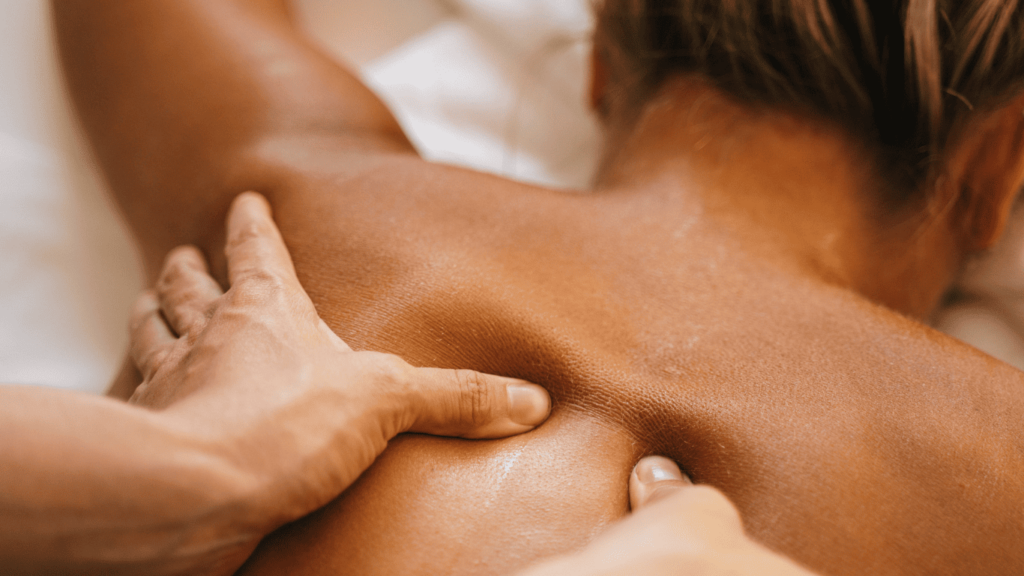
The Professional Difference: At Kaya Varua Massage, our certified therapists understand each person’s unique needs. We work with your body’s natural healing rhythm, not against it.
Learn more about our specialized Post-Surgical Lymphatic Drainage Service
Creating YOUR Treatment Schedule
Rather than rigid weekly prescriptions, work with your therapist to create a schedule based on:
- Your swelling patterns
- Your comfort needs
- Your healing progress
- Your lifestyle demands
- Your body’s response
Troubleshooting Common Garment Challenges
Real Solutions for Real Problems
Challenge: Garment Rolling or Sliding
Practical Solutions:
- Check if you need different size
- Use fashion tape for security
- Try different garment style
- Adjust initial positioning
- Consider silicone grip bands
Challenge: Skin Irritation
Practical Solutions:
- Wear thin cotton layer underneath
- Apply barrier cream
- Ensure garment is clean
- Check for allergic reaction
- Try different material/brand
- Give skin breathing breaks
Challenge: Bathroom Difficulties
Practical Solutions:
- Choose open-crotch designs
- Practice removal techniques
- Time bathroom visits
- Consider two-piece options
- Keep spare garment handy
Challenge: Sleep Discomfort
Practical Solutions:
- Adjust closure tension for night
- Use supportive pillows
- Try different positions
- Consider looser nighttime garment
- Follow your comfort needs
Challenge: Visible Under Clothing
Practical Solutions:
- Choose appropriate colors
- Wear looser clothing styles
- Layer strategically
- Embrace your recovery process
- Remember it’s temporary
Transitioning Out - Your Individual Journey
Recognizing YOUR Readiness Signs
The transition from compression garments is highly individual. Your body and your medical team will guide this decision, not a predetermined timeline.
Positive Indicators to Discuss with Your Team:
- Minimal swelling throughout the day
- Comfort without the garment
- Stable measurements
- Your surgeon’s assessment
- Your therapist’s evaluation
- Your confidence level
Reasons You Might Continue Longer:
- Ongoing swelling patterns
- Personal comfort preference
- Activity-related needs
- Individual healing pace
- Medical team recommendation
- Your unique situation
The Gradual Transition Method
Create YOUR Transition Plan:
Work with your therapist to develop a personalized approach:
- Start with short periods without garment
- Monitor your body’s response
- Adjust based on swelling
- Progress at YOUR pace
- Keep garment available
- Honor your comfort needs
Remember: Some people transition quickly, others take months. Both are normal and valid.
Long-Term Considerations
You Might Choose to Wear Your Garment:
- During menstrual cycles
- For long travel
- During extended standing/sitting
- For exercise support
- For confidence
- Whenever YOU feel it helps
Professional Support Services
Understanding Service Timelines and Medical Authorizations
At Kaya Varua Massage, we provide comprehensive post-surgical support, always working within medical guidelines and your surgeon’s protocols.
Post-Surgical Recovery Services
Manual Lymphatic Drainage (MLD):
- Primary recovery technique
- Generally safe immediately post-surgery
- Reduces swelling and discomfort
- Accelerates natural healing
- No medical authorization typically required
- Customized to your healing stage
Scar Tissue Management:
- Begins when incisions are healed
- Softens developing fibrosis
- Improves tissue mobility
- Maintains surgical results
- Timing varies by individual
Services Requiring Medical Authorization
Important: The following services are enhancement techniques, NOT primary recovery tools. They require your surgeon’s explicit approval and appropriate healing time:
Ultrasonic Cavitation:
- NON-surgical body contouring technique
- Requires medical clearance post-surgery
- Typically not before 3-6 months post-op
- Used for stubborn areas after healing
- Not a recovery service
Radiofrequency Treatments:
- Skin tightening technology
- Requires complete healing
- Medical authorization essential
- Timeline varies significantly
- Enhancement, not recovery
Wood Therapy (Maderoterapia):
- Body sculpting technique
- NOT for post-surgical recovery
- Only after complete healing
- Requires medical clearance
- Used for contouring after recovery
- Can be too aggressive for healing tissue
Critical Distinction:
- Recovery Services: Support healing (MLD, gentle massage)
- Enhancement Services: Shape and contour AFTER healing (require authorization)
Why Choose Kaya Varua Massage
Our Commitment to Safe, Ethical Practice:
- Always respect surgeon protocols
- Never perform unauthorized techniques
- Honest about service timelines
- Clear about what’s safe when
- Your safety is our priority
Our Mobile Service Advantage:
- Professional care at home
- No travel stress post-surgery
- Familiar environment healing
- Flexible scheduling
- Personalized attention
Service Areas
Broward County: Pembroke Pines, Hollywood, Miramar, Cooper City, Davie, Plantation, Sunrise, Weston, Fort Lauderdale, Pompano Beach, Coral Springs
Miami-Dade County: Aventura, Hialeah, Homestead, Kendall, Key Biscayne, Miami Beach, North Miami Beach, Coral Gables, Doral
Palm Beach County: Boca Raton, Delray Beach, Boynton Beach, Lake Worth, West Palm Beach, Wellington
Frequently Asked Questions
Honest Answers to Real Concerns
Q: How long will I need to wear my compression garment? A: Every person heals differently. While some wear garments for 6-8 weeks, others need several months. Your body, surgeon, and therapist will guide this decision – not a generic timeline.
Q: Can I sleep without my garment? A: This depends on YOUR healing and comfort. Some people need nighttime compression longer, others can remove it sooner. Follow your medical team’s specific guidance.
Q: How many garments do I need? A: We recommend at least 2 garments to rotate. This allows for washing and ensures you always have a clean one available.
Q: My garment is leaving marks, is this normal? A: Light marks that fade quickly are common. Deep, painful marks or marks lasting over 30 minutes need attention – your garment may be too tight.
Q: When can I exercise in my garment? A: Light walking is usually encouraged early. More intense exercise requires your surgeon’s clearance. Always wear your garment during approved exercise unless told otherwise.
Q: What if my garment becomes too loose? A: As swelling reduces, you may need a smaller size or transition to Stage 2. Work with your therapist to determine timing.
Q: Can I wash my garment in the washing machine? A: Yes, using cold water and gentle cycle in a mesh bag. While air drying is ideal, low-heat machine drying for short periods is acceptable when needed.
Q: Why do I need lymphatic drainage if I have a compression garment? A: Your garment contains fluid, but drainage actively eliminates it. They work together – neither alone is as effective as both combined.
Expert Insights for Success
Professional Wisdom from Kaya Varua Massage
After years of supporting post-surgical recovery throughout South Florida, here’s what truly makes a difference:
1. Honor YOUR Unique Healing: Your timeline is your own. Comparing to others only creates unnecessary stress.
2. Invest in Quality AND Comfort: The best garment is one you’ll actually wear. Prioritize both quality and personal comfort.
3. Combine Compression with Professional Drainage: This partnership optimizes your recovery potential.
4. Listen to Your Body: Discomfort may be expected, but pain is a signal to investigate.
5. Communicate with Your Team: Your surgeon, therapist, and support team are your partners.
6. Be Patient with the Process: Healing takes time. Trust your body’s wisdom.
7. Maintain Realistic Expectations: Every body heals differently. Your journey is unique.
Conclusion: Your Recovery, Your Journey
Understanding compression garments empowers you to make informed decisions about your recovery. At Kaya Varua Massage, we’re honored to support your unique healing journey with professional, compassionate care.
Remember: Recovery isn’t about meeting rigid timelines or comparing to others. It’s about supporting YOUR body’s natural healing process with the right tools, professional guidance, and patience.
Ready to Support Your Recovery?
Don’t navigate this journey alone. Our certified therapists provide professional, compassionate support tailored to YOUR needs, in the comfort of your home.
📞 Call/Text: (786) 416-5078
💬 WhatsApp: Message Us Directly
🌐 Website: Book Your Session
📧 Email: info@kayavaruamassage.com
Our Promise to You
At Kaya Varua Massage, we believe in “Massages for the Body and Soul.” We respect your unique healing journey and provide honest, professional guidance without rigid expectations or false promises.
Your recovery is as individual as you are. Let us support you with professional expertise, genuine empathy, and the convenience of mobile service throughout South Florida.
Mobile Service Available Throughout South Florida Miami-Dade • Broward • Palm Beach Counties
This comprehensive guide represents our commitment to honest, empathetic education about post-surgical recovery. Every person’s journey is unique, and we’re here to support yours.